Research at FiskerCreating the world’s most emotional & sustainable vehicle
Starting in late 2023, I saw an opportunity to empower the design team - I took my chance. Despite many challenges and pushback, I was able to convince leadership to provide the UX and research team with invaluable tools to launch our learning platform for the entire org to benefit from, democratizing user experience and creating the building blocks for a user-centric culture.
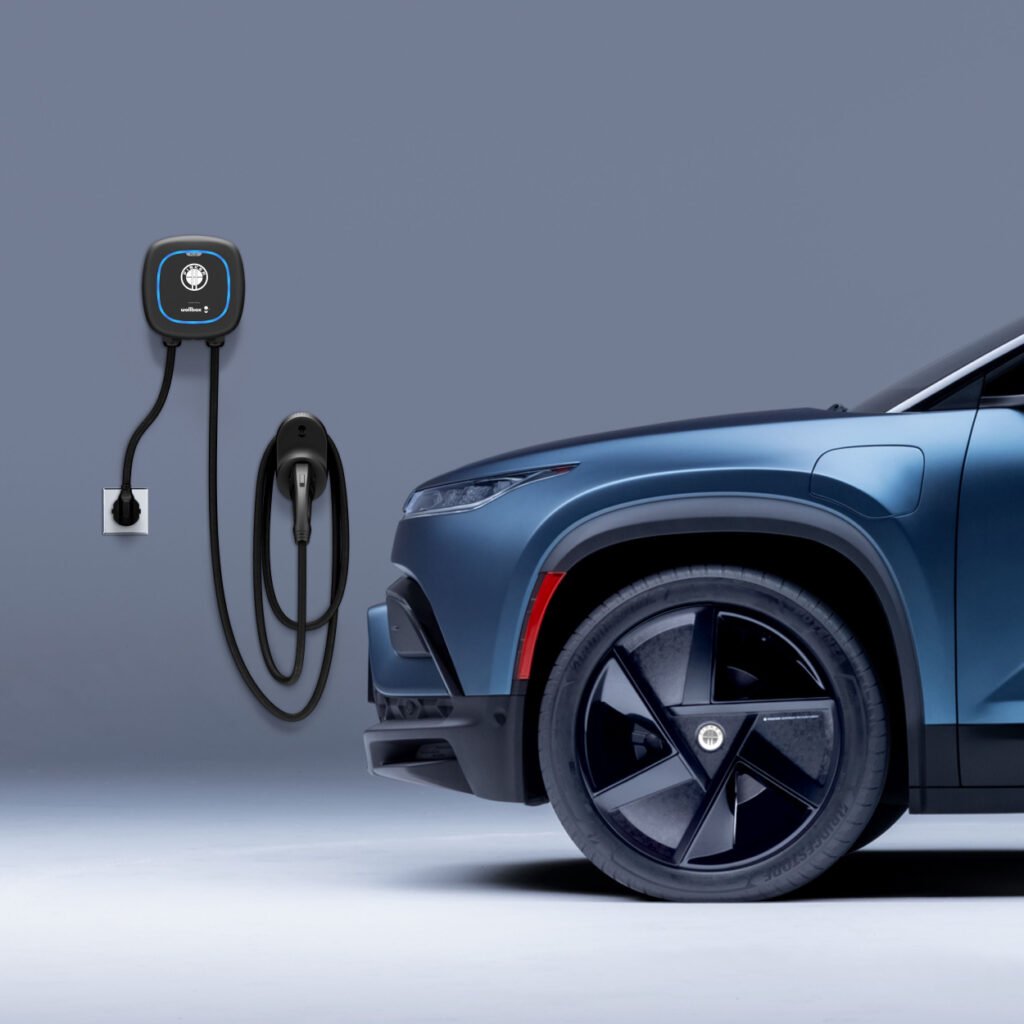
Fisker is a for-profit electric vehicle start-up whose mission is to create the world's most emotional and sustainable vehicles, helping to build a cleaner future for all.
Revolutionizing Research
Role || UX Designer
Timeframe || 12.2023 - 04.2024
Challenge
A recurring user issue—“What does this button do?”—exposed more than a confusing interaction. It revealed a deeper breakdown in how research insights were captured, shared, and acted upon. Critical findings were scattered, processes were manual, and research lacked visibility at the executive level. This slowed decision-making and undermined confidence in the user experience.
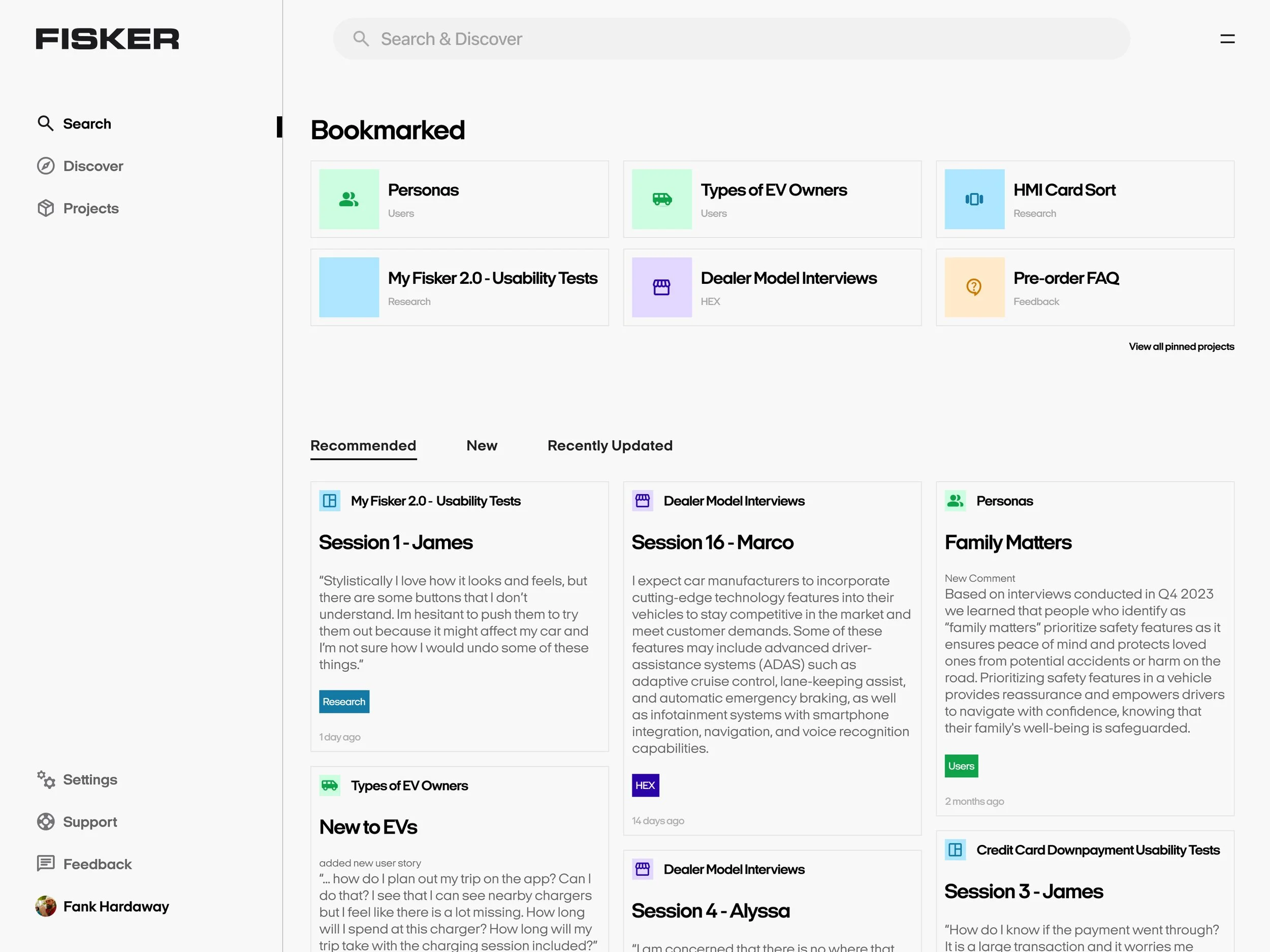
Centralized insights
org-wide visibility for faster decision-making
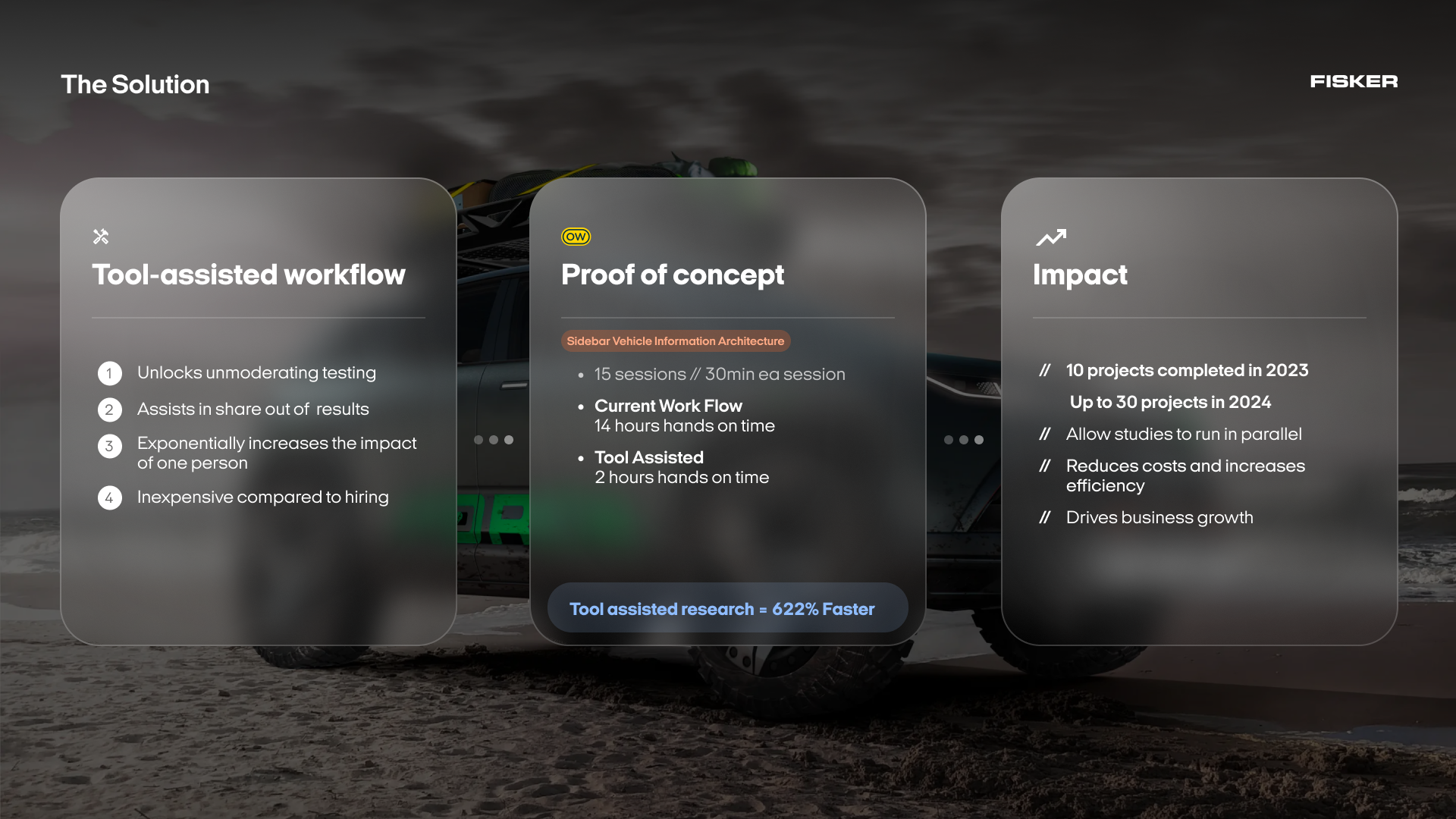
Pitched to VP & CEO
Secured funding that elevated research as a strategic function
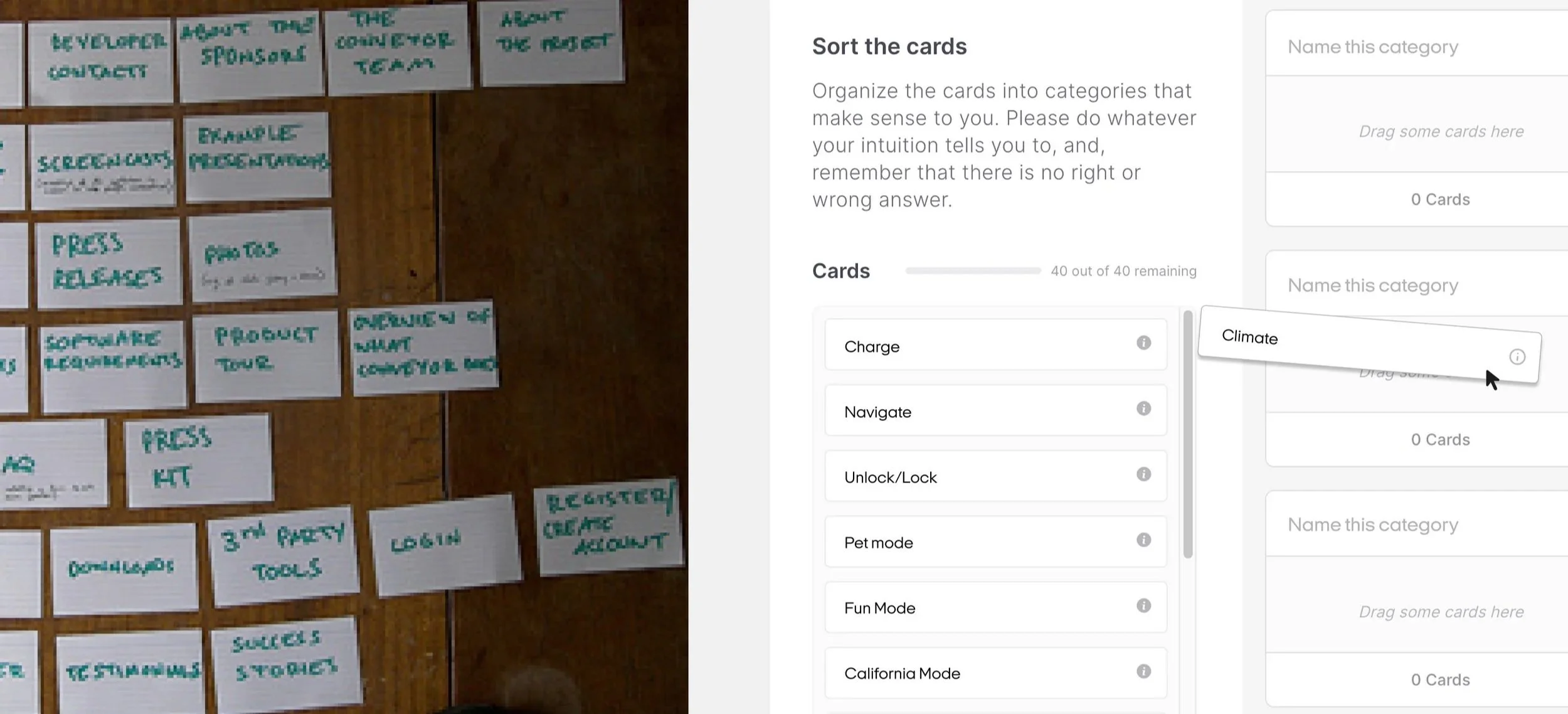
Replaced manual workflows
780% efficiency gain and 28 more research projects annually
Approach
As the lead UX designer, I partnered with research leadership to reimagine how insights flowed through the organization:
Defined the vision for a scalable research platform → centralized insights and made research accessible across teams.
Championed a new workflow to replace manual processes → introduced tool-assisted methods that reduced inefficiencies and human error.
Unified cross-functional stakeholders → aligned marketing, legal, engineering, and leadership around shared research practices.
Secured executive sponsorship → pitched directly to the VP and CEO, earning funding and elevating research as a strategic partner in product development.
Impact
Outcomes from the research platform & operations work
Efficiency Gain
780%
Tool-assisted workflows replaced manual steps across research ops.
Research access
Org-Wide
Centralized insights let designers validate concepts independently.
Projects per year
+28
Capacity expanded from 10 to 38 with the same headcount.
Retrospective
Looking back, this project was a turning point in how research was valued at Fisker. By proving the ROI of UX research, we not only amplified the voices of researchers but also embedded user insights into product decisions at scale.
The experience reinforced my belief that design leadership is about more than creating screens — it’s about building systems, securing buy-in, and ensuring research has the influence it deserves. These lessons continue to shape how I approach design leadership today.